

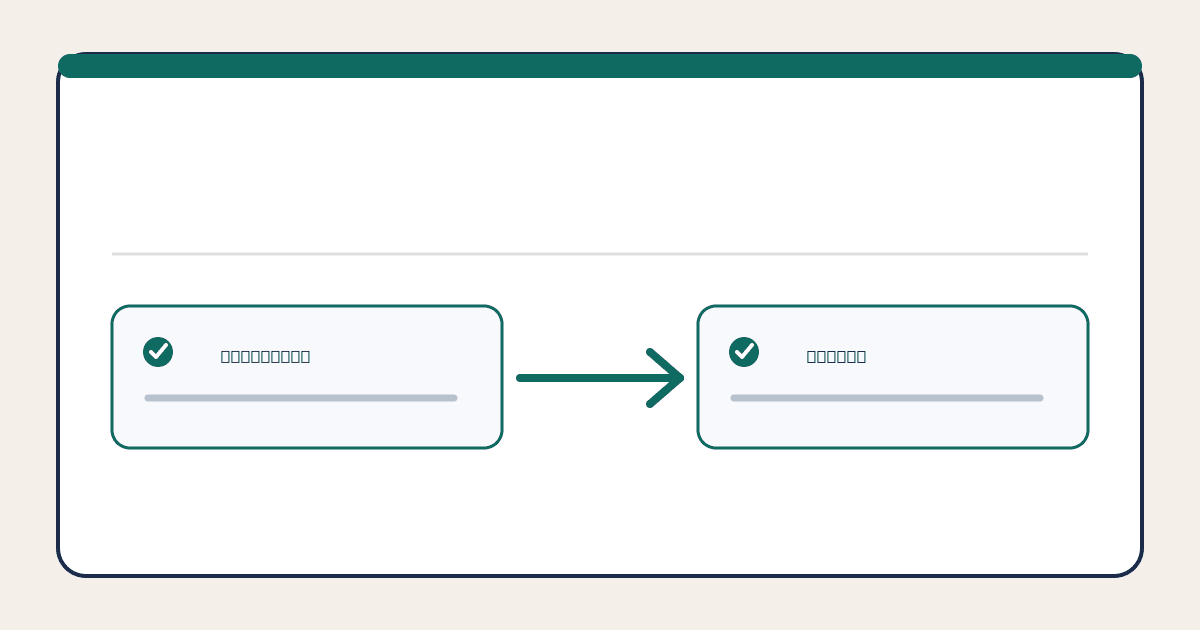
How can an employer complete Form I-9 for a remote executive assistant?
Abstract
Remote work does not remove an employer duty to complete Form I-9 for a new employee. USCIS instructions place Section 1 with the employee no later than the first day of employment and generally require the employer or its authorized representative to complete Section 2 within three business days after work begins [1][2][3]. A qualified E-Verify employer may use the DHS-authorized alternative procedure, but a casual video call is not the procedure [4].
Methodology
The analysis uses ten current USCIS, E-Verify, and ICE sources covering completion, remote examination, storage, correction, reverification, system use, and inspection [1][2][3][4][5][6][7][8][9][10]. It addresses employer workflow, not immigration advice or a judgment about any document or person.
Remote work does not remove the employer duty
The employer remains responsible for timely and accurate completion even when an authorized representative performs the document examination [2][3][8]. A support-team checklist should bind the employee start date to the Section 1 and Section 2 due dates, then name the employer owner who reviews completion.
Do not use a staffing or equipment date as a substitute for the actual first day of employment. If the person will work for fewer than three business days, the instructions apply a different Section 2 timing rule [3]. Record the applicable rule rather than relying on a generic remote-hire reminder.
The employee chooses acceptable documents
The employee presents either one List A document or a combination of one List B and one List C document. An employer cannot demand a preferred document because it seems easier to inspect remotely [2][3]. The workflow should present the official lists without steering the choice.
The reviewer examines original, acceptable, and unexpired documentation under the applicable procedure, subject to the receipt rules described in official guidance [3][8]. Copies and stored images need access controls because they can contain more identity information than the scheduling team needs.
Authorized representatives act for the employer
USCIS permits an employer to designate an authorized representative to complete Section 2 [3][8]. The representative is not making a personal courtesy check. They act on the employer behalf, and the employer remains liable for violations connected to the form.
Give the representative exact written instructions, the current form edition, the official document lists, a secure return route, and a contact for exceptions. The executive assistant or hiring coordinator can arrange the handoff but should not improvise document acceptance rules.
Alternative remote examination has conditions
The DHS alternative procedure is available only to qualified employers that participate in E-Verify and remain in good standing, and it includes prescribed steps [4][9]. The process includes examining copies, conducting a live video interaction, indicating use of the alternative procedure, and retaining required copies.
A company that does not qualify still needs physical examination by the employer or an authorized representative. Eligibility and procedure status should be checked from the current federal source before each policy revision, not inferred from a past pandemic-era flexibility.
Store, correct, and reverify with boundaries
USCIS provides rules for how long employers retain forms and permits paper, microform, or electronic storage that meets applicable requirements [5]. Keep Form I-9 separate from routine personnel scheduling when that separation narrows access and makes an inspection response easier.
Corrections should preserve what changed, who changed it, and when [6]. Reverification applies only in specified circumstances and should follow current guidance [7]. ICE can inspect employer records [10], so the durable file needs form identity, dates, responsible actors, and secure retrieval without copying document details into general onboarding notes.
Key findings
- Section 1 and Section 2 timing is tied to the actual first day of employment [2][3].
- The employee chooses which acceptable documents to present.
- An authorized representative acts for the employer, which retains responsibility [3][8].
- Remote examination requires qualification and every prescribed step [4][9].
- Retention, correction, and reverification need separate controlled records [5][6][7].
Sources
- I-9 Central, U.S. Citizenship and Immigration Services
- Completing Form I-9, U.S. Citizenship and Immigration Services
- Form I-9 Instructions, U.S. Citizenship and Immigration Services
- Remote Examination of Documents, U.S. Citizenship and Immigration Services
- Retention and Storage, U.S. Citizenship and Immigration Services
- Form I-9 Resources, U.S. Citizenship and Immigration Services
- Form I-9 Overview, U.S. Citizenship and Immigration Services
- Handbook for Employers M-274, U.S. Citizenship and Immigration Services
- E-Verify User Manual, E-Verify
- Form I-9 Inspection Process, U.S. Immigration and Customs Enforcement